 HOME
HOME BUSINESS DIRECTORY
 CLASSIFIEDS
 CALENDAR

 NEWS
NEWS SPORTS
 OPINION
 OBITUARIES


The Nevada Senate Natural Resources Committee heard a revised version of Assembly Bill 104 (AB 104) Thursday, May 8. The bill would establish the Nevada Voluntary Water Rights Retirement Program to buy and retire water rights from willing sellers to reduce overuse in groundwater basins.
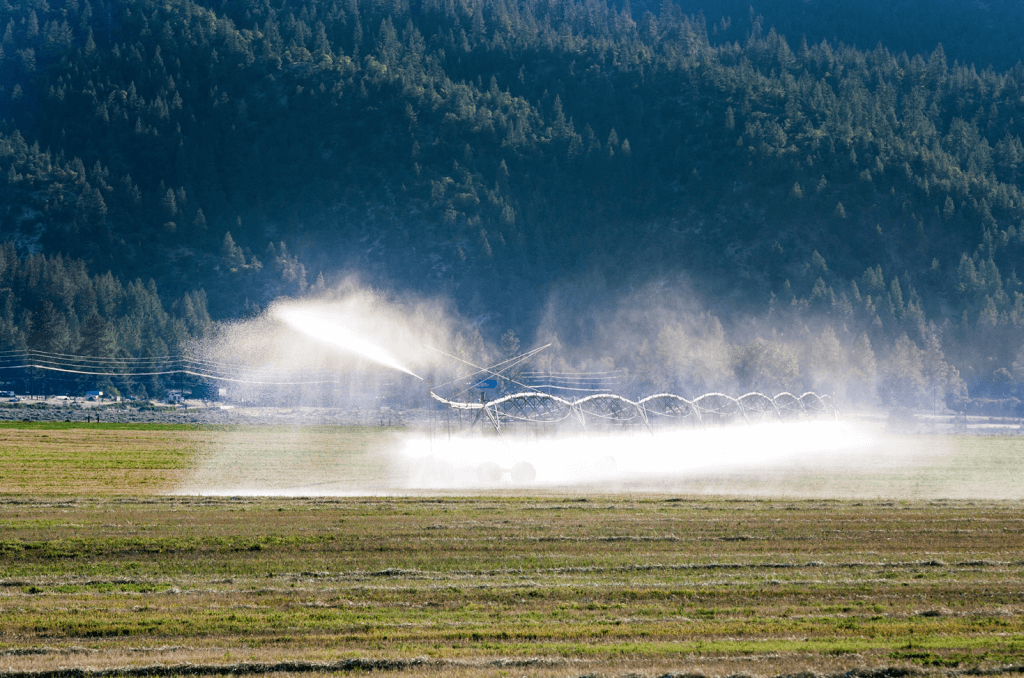
On Thursday, May 8, the Nevada Senate Natural Resources Committee reviewed an updated version of Assembly Bill 104 (AB 104). This bill proposes the creation of the Nevada Voluntary Water Rights Retirement Program, which would allow the state to purchase and retire water rights from willing sellers in an effort to mitigate overuse in groundwater basins.
Groundwater supplies about 30 percent of the state’s total water use, and in rural communities, it’s the primary or sole water source for homes, farms and ecosystems. This bill comes at a critical time, as drought and rising temperatures continue to intensify across the state. According to the NOAA National Centers for Environmental Information, average temperatures in Nevada have risen nearly 2.4 degrees Fahrenheit since the start of the 20th century, putting pressure on already overdrawn aquifers.
A study by The Nature Conservancy in 2022 found that 39 percent of the more than 6,500 wells analyzed in Nevada had declining groundwater levels over the past several decades. Instead of drilling deeper wells at great expense, property owners in places like Diamond Valley would rather be paid to permanently retire their water rights and keep the water in the ground for others to use.
In 2023, the Central Nevada Regional Water Authority and Humboldt River Basin Water Authority were granted $15 million to purchase and retire groundwater rights from willing sellers. This allowed water users in over-pumped basins to sell back their water at $900 per acre-foot, and over-appropriated basins that were not over-pumped were valued at $350 per acre-foot.
Laurel Saito was on the technical advisory committee of that pilot program and is the water strategy director for The Nature Conservancy. She stated that interest in the program far exceeded its budget, so legislating a voluntary water rights retirement program was the next logical step.
“There’s pretty wide support for this because doing nothing is not an option,” she said. But a bill similar to AB 104 failed to get out of the Nevada Senate Finance Committee last session, likely due to a request for $5 million in funds. AB 104 has no such funding request, and neither does its Senate version, SB 36.
“If we can just get this program solidified in the state, we can write some grants to fund it,” said Saito.
Jake Tibbits, the natural resources manager for Eureka County, shared that sentiment and added that there could be funding available via private organizations and bond sales by the Conserve Nevada program.
“It’s kind of the ‘Field of Dreams’ approach,” he laughed. “If you build it they will come.” Multiple farmers contacted Tibbits and expressed interest in retiring their water rights even after the pilot program funding was exhausted.
“I’m really certain that if we were to get funding and pass a program, we’d have interest from far more than just Diamond Valley.”
AB 104 had unanimous committee support after an initial amendment on April 22, and while Saito said there would be an amendment presented again Thursday, it would be a “friendly” amendment to clean up minor details before presenting it to the Senate to be reconciled with SB 36.
“We’ve seen immediate impacts of that water rights retirement,” Tibbets said. “This is a solution that can provide positive results overnight.”
In two years, the pilot program kept more than 25,000 acre-feet of groundwater in the ground.
Leave a Reply