 HOME
HOME BUSINESS DIRECTORY
 CLASSIFIEDS
 CALENDAR

 NEWS
NEWS SPORTS
 OPINION
 OBITUARIES


Farmers and ranchers in rural Nevada are having a tough year. Livestock prices might be through the roof, but feed producers have faced tighter margins due to operating costs outpacing revenues. Input costs for essential goods like energy, feed and fertilizers have surged as a result of the Iran War, and high interest rates and inflation have made it harder for farmers and ranchers to replace or repair equipment.
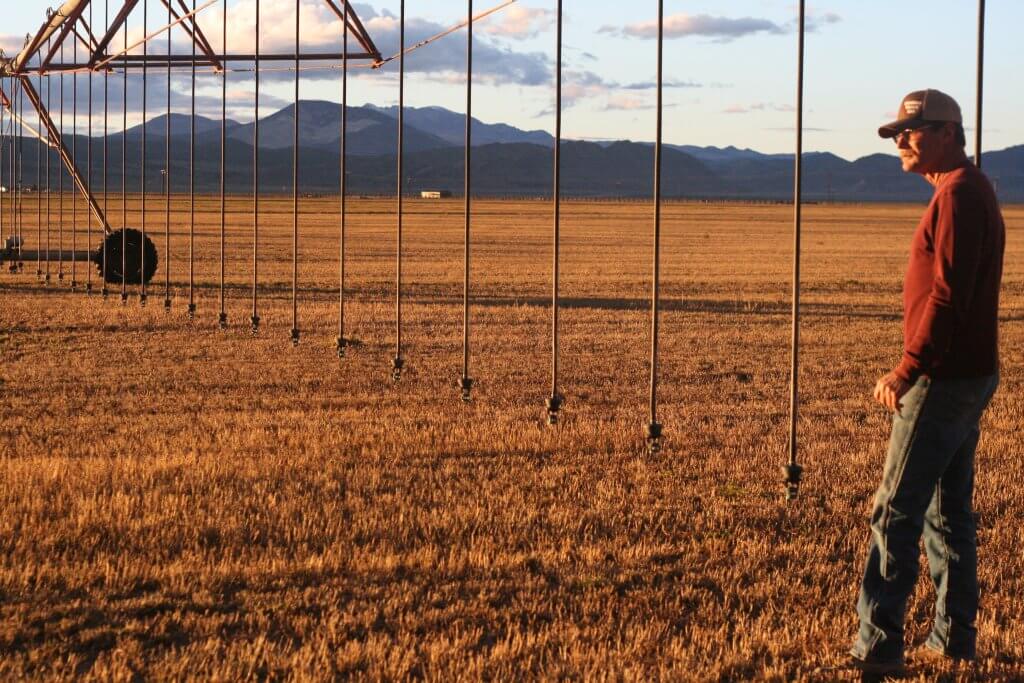
Bevan Lister, Nevada Farm Bureau president, grows alfalfa hay in three locations. “The farms in Lincoln County are really challenged by electric rates…I pay almost double in Lincoln as I do in Lander,” he informed. “Fuel is 40% of our annual budget…last year we had a bit of a reprieve, but with the situation in the Strait of Hormuz…this year’s going to be rough.”
Diesel prices in Nevada are up 40% year-over-year, but buyers of red-dyed diesel for off-highway use are exempt from state and federal taxes. Those prices are anywhere from 37% to 48% higher than last year, though.
“I usually buy my diesel every February, which is a bit unfortunate because of the war. I had a bunch of leftover diesel in the tank…so I didn’t buy any in February like I usually do,” said Pioche farmer Dann Mathews. “I’ll usually buy 10,000 gallons at a time…but right now I’m only buying in 200-gallon sums hoping that it’ll go down.”

The weather – this year and last – hasn’t helped either. Almost the entirety of both Eureka and White Pine counties are currently experiencing severe drought conditions, with extreme drought conditions encroaching into the northern parts of the counties.
In Southern Nevada, Virgin Valley farmer Clance Cox said his biggest issue has been the drought and not having enough water runoff from last winter. The Virgin River, which only runs a couple of feet deep on average, “is down to about half of what it normally is,” Cox informed, adding that there are so many people pulling out water upstream that there’s even less left for those downstream.
Lister said that soil conditions in the central and northern part of the state are moderately poor to poor as a result of low precipitation during the winter. “Cattlemen are going to face pretty poor range conditions because we didn’t get winter,” Lister said. And now, El Niño is expected to bring more storms, resulting in flash flooding, which isn’t good for crops or the soil either.
“With the El Niño coming in, it’s a bit nerveracking…Every time I see rain clouds I get a bit nervous,” said Mathews. “You just don’t know. When it’s like this, the storms are really sporadic.”
Water policy has also played a pivotal role in these challenges for farmers and ranchers. “Diamond Valley is hit with water restrictions and water issues; in the western part of the state reservoirs are full…but it’s drying up quick,” Lister informed.
The Humboldt River has long been a hot-button issue amongst farmers and ranchers in the state, but in January 2024, the Nevada Supreme Court issued its decision in Sullivan v. Lincoln County Water District, recognizing the power of the State Engineer to conjunctively manage surface waters and groundwater. Nevada distributes water on a priority basis, with vested water rights getting highest priority, then senior water rights, and junior water rights holders have the lowest priority.
On Friday, July 31, the U.S. Bureau of Reclamation proposed a means for addressing the Colorado River water crisis. Nevada, Arizona and California are being asked to reduce their use of the Colorado River by up to three million acre-feet annually through 2036. That’s almost a quarter of the current total allotment – 13 million acre-feet – taken or lost annually.
Nevada takes the smallest share of Colorado River water of any Lower Basin state – 300,000 acre-feet annually. Arizona takes 2.8 million and California takes 4.4 million acre-feet. “Agriculture in Nevada doesn’t get Colorado River water – the challenge will be how to sustain growth in the Las Vegas valley with less water,” Lister said. “The challenges for agriculture will be whether the Southern Nevada Water Authority decides to restart efforts to obtain water from rural Nevada and the reduction in power generation on the dam increasing electricity costs.”
“It’s a little nerve racking because, even though we have good hay prices and good cow prices now…I think dairies have just gone away from using our hay, and are just buying cheaper forms of feed, and the export market has been nonexistent, and those are the things that have typically driven the market,” said Mathews. “So I don’t know that feed prices can be sustained long-term without those two things coming back.”

As a result, “alfalfa farmers are entering the fall under intense financial strain,” according to economists Daniel Munch and Faith Parum. “The biggest thing that’s affected us is…the export market went to absolutely nothing,” Mathews said. Alfalfa exports are down 34% since 2022, according to analysis by the American Farm Bureau. Losses are expected to deepen in 2027, too.
Munch and Parum say that “additional economic assistance is needed and supported on a bipartisan basis, especially for row crop, specialty crop, hay and sugar producers.” They also recommend “a modernized five-year farm bill that protects interstate commerce from a patchwork of state legislation; a legislative fix to agricultural labor; and stronger risk management tools, including better data collection and publication to support more effective options for specialty crop producers.”