 HOME
HOME BUSINESS DIRECTORY
 CLASSIFIEDS
 CALENDAR

 NEWS
NEWS SPORTS
 OPINION
 OBITUARIES


Growing up in war-torn Germany
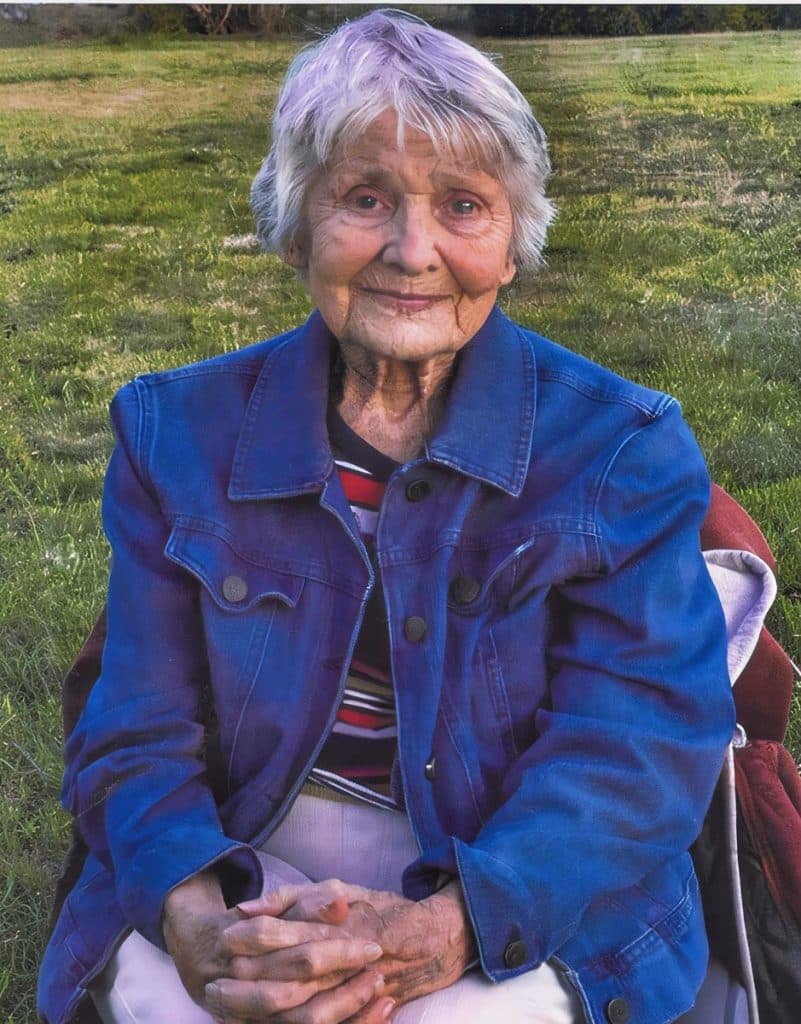
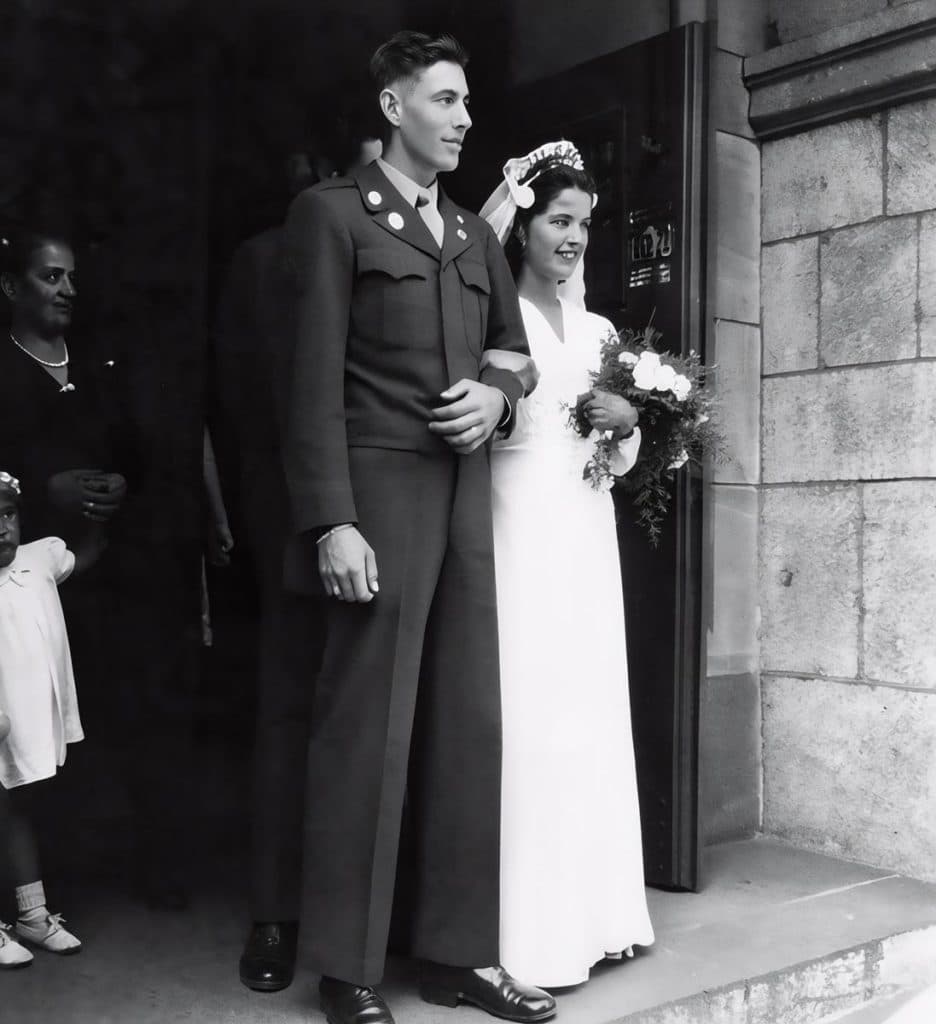
Near the close of World War II, German native Anna “Kitty” Burkhardt married American soldier Richard “Dick” McKay in her hometown near Frankfurt, Germany. Just six weeks later, she arrived in rural Eureka, Nevada—Dick’s hometown—and has called it her home since the fall of 1947.
Kitty grew up in a small town just outside Frankfurt on the River Main. She was only 10 years old when World War II began. Now, at nearly 97, she remembers her youth like yesterday.
“Do people realize how bad it was then?” she asks. “Frankfurt was almost all bombed out during the war. It was something I never forgot. We had no food; it was hard. None of us were for Hitler. The people hated him, but you dare not say anything against him,” she said during a recent interview.
Kitty, which is the name she coined herself, vividly recalled scenes from her youth, including being shot at, bombs landing next door, having no food to eat and people “disappearing.”
She was raised by her oma—grandmother in German—and was the eldest of five children.
As a child, she lived with her father’s mother for a time as things were hard. When her father came to bring her back to live with her family, she cried and cried, and her dad had to take her back to Oma’s house.
“Dad and Mom wanted me to come back, but I wanted to stay with Oma,” she said. “They finally said I could stay. She raised me. I was raised with my cousin Hans. He’s still alive and lives in Germany. I remember coming home from school one day in 1939, and my oma was crying. She told me, ‘We are at war with Poland.'”
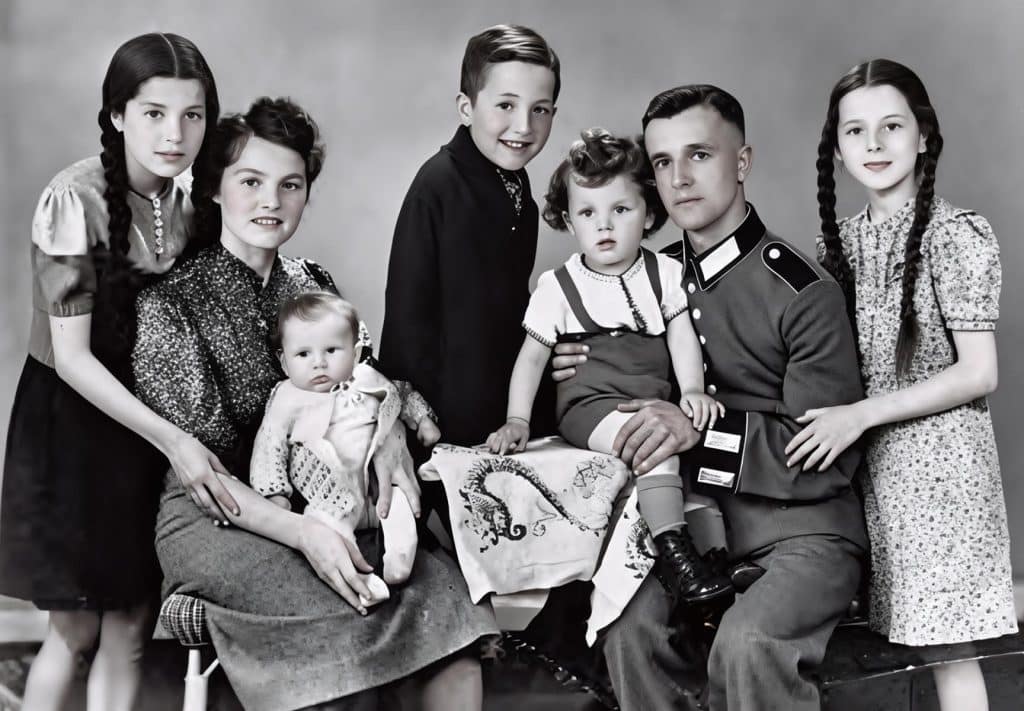
Kitty’s father, Alois Burkhardt, was drafted into the Wehrmacht (the unified armed forces of Nazi Germany from 1935 to 1945) despite having five children. He was killed in action on August 23, 1944, near Normandy in France. He was 33 years old. Kitty was 14.
“My mom lived a couple miles away from Oma. I was at her home one day; there was a big nursery there, and my mom sent my sister Hilla, my brother Aloise and I to see if we could buy some spinach. Just then, an American fighter plane started shooting at us. I remember the ground kicking up dirt from the bullets between my siblings and me. My mom was screaming, ‘Run back, run back!’”
“It was scary. Day and night, we’d be sitting in the basement of the apartment complex, which served as a bomb shelter. To this day I’ve never forgot the sirens. We could hear the Germans shooting at the bombers with the anti-aircraft guns. Many of the soldiers on the guns were teenagers as young as 14. It would light up the sky, and we could see the airplanes,” she said. “It’s like it was yesterday.”
Her Aunt Else also lived close by. “She had a really big garden with lots of strawberries. A bomb came down right there!” she remembered. “The bombing hit lots of houses—old people and children.”
Due to the war, Kitty didn’t go to school beyond the eighth grade. She recalls the time her school was bombed. “It was during the night,” she said. “So no one was hurt. But I remember I was supposed to give a speech the next day. I was happy I didn’t have to give the speech! But that was it, no more school!”
“It was Hitler that started the war. He was an evil man. Our neighbor was in a concentration camp,” she said. “They caught him and came in the middle of the night because he had an AM radio and was listening to the BBC for news on the war. He disappeared. We didn’t know about concentration camps then.”
She recalls living close to a Catholic church and convent and fondly remembers being taken care of by the nuns there.
“The Nazis put all their nice, fancy furniture in our Catholic church,” she said. “When we had Mass, we had to walk around the furniture. I was only a kid, but I still remember it!”
She recalled a business that was broken into and the merchandise thrown out onto the street. She noted it was owned by a Jewish family named Schiff. “It’s so sad why people hate each other!” she said. “People forget that Jesus was a Jew. But to us they were all just German!”
A wartime marriage
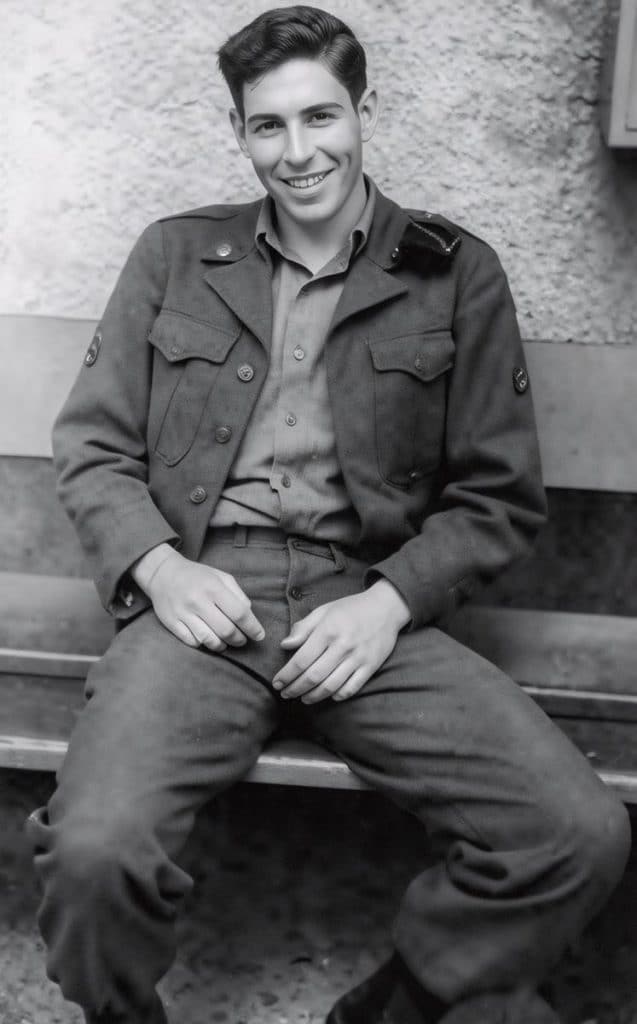
Enticed by the promise of one free meal a day as well as a way to help her family, 14-year-old Kitty took a job working for the Americans.
“I got myself and my two girlfriends a job. It was a little entertainment place called the Low-Pointers Inn for the American soldiers,” she said. “They would serve toasted cheese sandwiches, hot dogs, fresh beer—it had green flecks in it—and Coke. There was an American Army band playing big band music. Glenn Miller was very popular at the time and ‘In the Mood’ was a big hit. We weren’t allowed in there. The French girls were allowed. But we worked there.”
“This is where the name Kitty came from,” she added. “I thought, ‘I’m not going to give them my real name, so I told them my name was Kitty—an American name!’”
It was at the Low-Pointers Inn that Kitty met Dick. “This was a place for war veterans,” she said, referring to the inn. It was for soldiers who had low points. A point system was established by the US Army directly after Germany’s surrender in May 1945, determining a priority order for returning home.
“He was so persistent,” she remembered. “He’d always come talk to me.”
The couple were married on August 19, 1947, by an American captain who was also a Catholic priest. Dick was almost 21 years old, Kitty nearly eighteen. They arrived in Eureka near the end of September.
Coming to America
Kitty said goodbye to her family in Germany, unaware that it would be the last time she saw most of them.
“I left all my people,” she said. “But because of the war, I had been on my own since I was 14.”
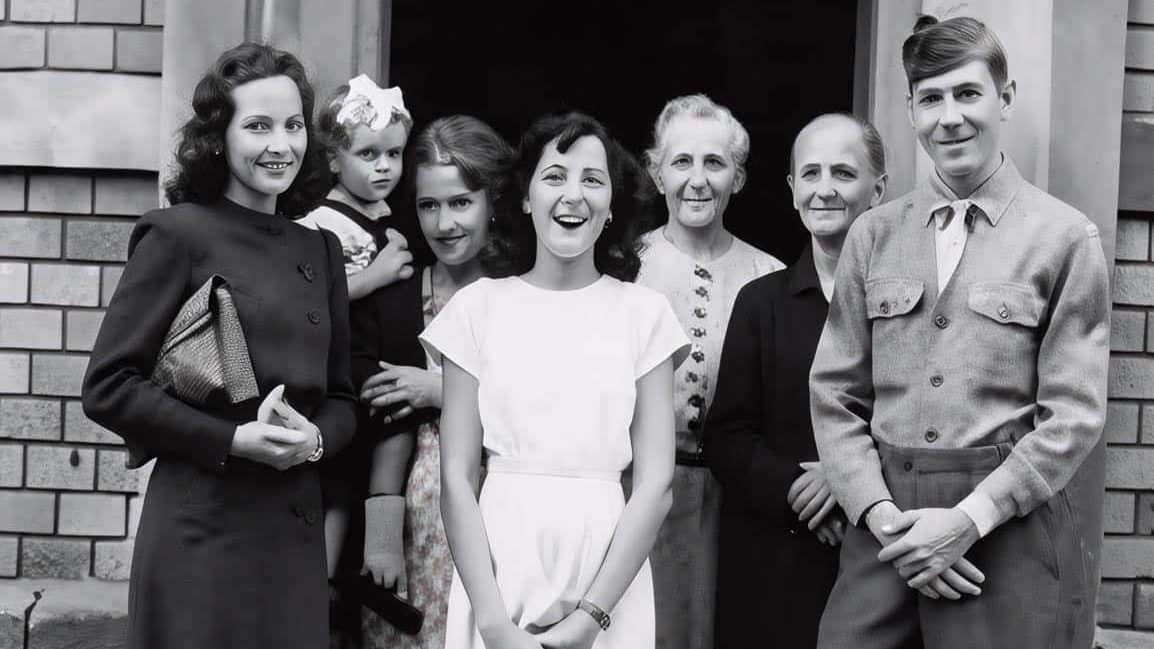
Once they made New York City, it took another 12 days by train to reach Reno. Dick’s sister, Margie, and brother, Bob, along with a friend, Johnny Jaureguito, met them at the station in a little four-seater coupe.
“We drove all night to Eureka, and I sat on Dick’s lap because of the small car. I didn’t see Nevada because it was dark,” Kitty noted. “We arrived about seven in the morning. Dick’s brother, Bill, and his mom, Carrie, came out of their house, and I said to myself, ‘Oh my God, is that where you live?’” The couple spent their first year of marriage with Dick’s mom in the little white house that is still owned by the McKay family.
Life in Eureka soon proved difficult as well, though in a different way. Kitty made friends, raised a family and learned to live off the land.
Home means Nevada
In 1956 the couple purchased the Snowball Ranch, 40 miles south of Eureka.
“I was 26 or 27 years old when I went to live at the ranch,” she said. “We homesteaded the ranch. We had no electricity, no water, no bathroom. That’s how I lived. But I liked it. I love to work. I had a big garden. We only had two cows. Dick was a hard worker. I remember that Floyd and Hattie Schaefer’s oldest boy, Bill, went out and helped cut the meadow hay with a hand sickle. After that it rained and kept the hay wet for 10 days, and the hay was ruined. That was the start of the ranch,” she said.
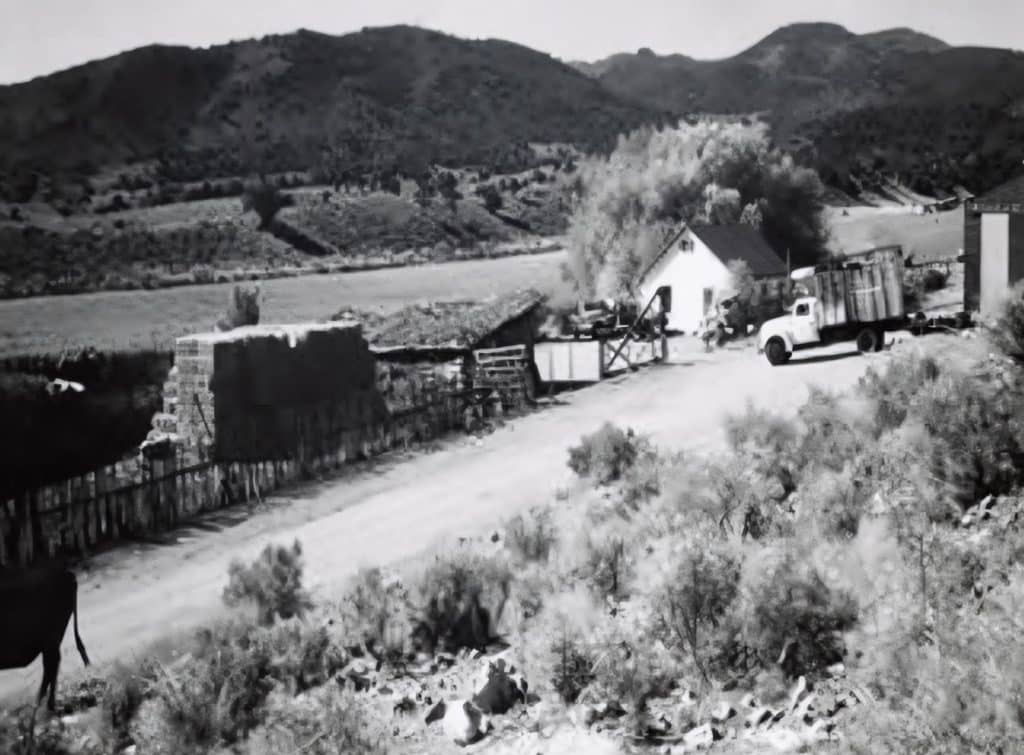
Some of her best friends were sisters Ellen and Juanita (Nita) Holley Damele, who were married to brothers Leonard John and John Charles Damele.
Dick taught Kitty how to ride and gave her a broken little mustang that she rode around town. “I remember I was riding my horse Dynamite in town and I stopped and started talking to them,” she said. That was the start of their lifelong friendship.
“Ellen, Nita and I would get together once a week. I used to fix German food for them. Their mother was part German,” she said.
Early Eureka
Kitty recalled the hard times in the early days when Dick was a child growing up in Eureka in the 1930s. Dick’s father, Robert McKay, married Carolina “Carrie” Gibellini, known as “Nanny” to Kitty, but Robert died young, in 1928, when Dick was only two years old. Carrie was left alone to raise their four children, all under five years old at the time.
“When Dick was 10, he went to the ranches to work for $1.00 a day,” noted Kitty. “He bought a new pair of Levis and shoes to go back to school with.”
To support her family, Carrie found herself cooking at ranches and later provided bread and doughnuts for Joe and Hiram Kitchen, owners of the local grocery store, Kitchen Brothers.
“Every day she would make bread. She’d make yeast doughnuts on Saturdays and cake doughnuts on Mondays. People came from all over to buy her stuff.”
“She was Italian and the best cook,” Kitty recalled of her days spent with Carrie. “I was kind of starved from the war and could have eaten everything on the table, but I didn’t.”
In 1952 Kitty became an American citizen. Kitty, who knew very little English when she arrived, taught herself the language.
“I used to look at magazines and figure out the words,” she said. “English has a lot of words similar to German.”
Another good friend, a local lady by the name of Genevieve Bisoni, helped her prepare for the citizenship test, which included questions about America and its history. In addition, you had to speak English and live in America for five years. Local Judge John Sexton granted her citizenship after she successfully answered a series of questions.
“He asked me all these questions, and I knew them all,” she remembered. “He even complimented me. I was 22 then.”
Ranch life
She remembered ranch life as sometimes lonely, yet recognized how its hardships can foster independence and character. She fondly recalled the openness of the range and the close bonds formed with the few neighbors they had.
During the early years at the ranch, the Bureau of Land Management was formed. Kitty and Dick, like many not used to being told how and where to graze cattle, felt some conflict.
“We’ve fought with them ever since,” she added. “I walked every day. I used to take my dogs for walks, and I’d look out as far as I could see. I’d see no humans, no houses. It was a really good feeling.”
“But we always helped people, and when people came, we’d offer them whatever we had,” she said. “That’s how things were then.”
Thirty-three years passed before Kitty made a trip back to her homeland, but time had changed the places she remembered, and the people she knew were mostly gone.
In 1980, she returned to Germany with her daughter Pam, and in 2005 she went back with her son Rich and several of her grandchildren. They visited the German soldier cemetery in France where her father is buried, spent time with family and met with the neighbor who had survived the concentration camp from so long ago.
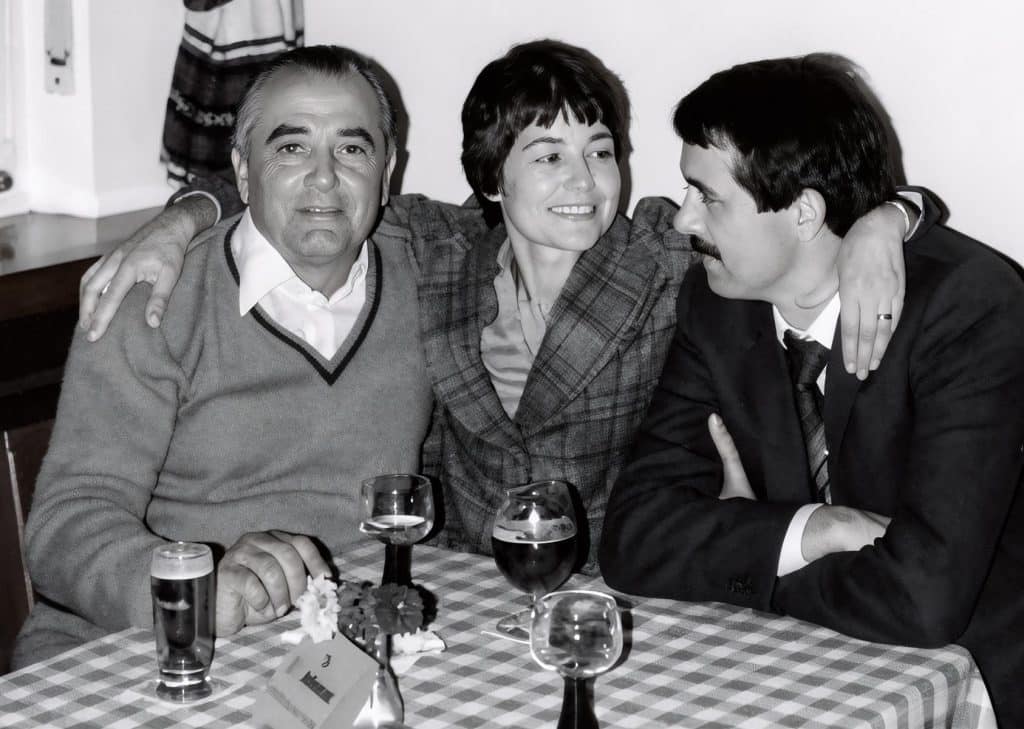
Of the relatives she left behind in 1947, Kitty reunited with her cousin and her brother. Her oma died in 1956, and her mother died at the young age of 53 in 1964. Her aunt and her uncles had passed away, and her sister had moved to America and was living in Wisconsin.
“The people close to me were all gone,” she said. “And when I left Frankfurt, it was all bombed out.”
When she returned, the buildings had been rebuilt—something she credits to the United States. “They helped rebuild Germany, France and Poland,” she said. Yet she also sees a sharp contrast between then and now: “Now they won’t even help us!”
“How could I leave all my people? And yet, I did,” she concluded. “I have my family here, and I wouldn’t want to live in Germany. I have a wonderful family here. Coming over here was well worth it.”
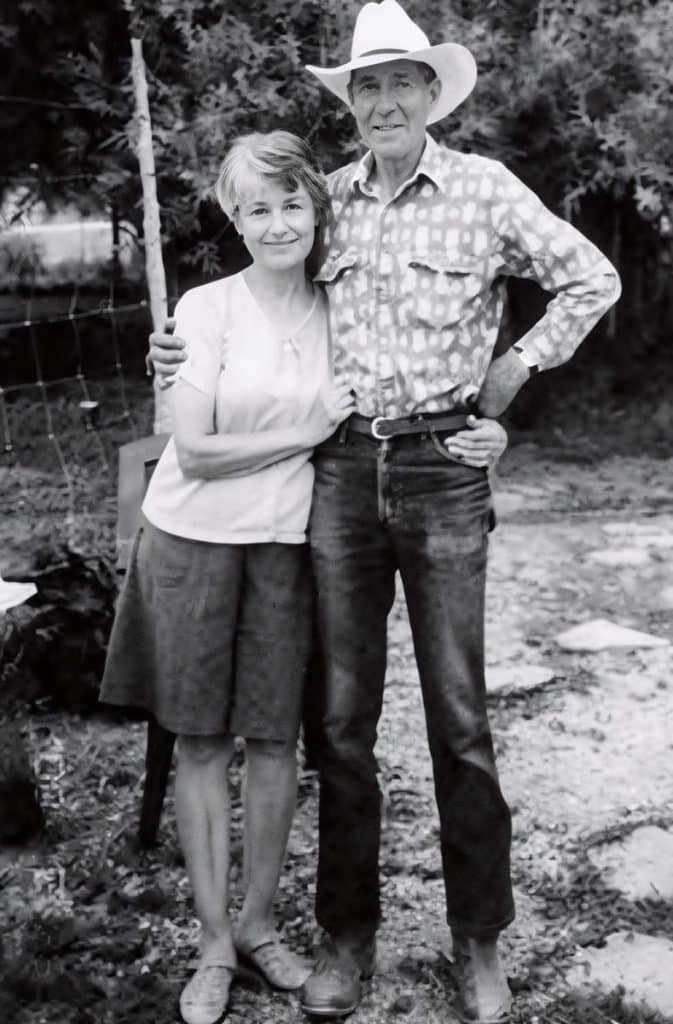
In 2002, Dick passed away. Nita and Ellen are now gone. But Kitty has made new friends and is close to her neighbors as well as her many grandchildren.
“So many things have changed! I told myself, ‘I’m not ever going to hate anyone. I may dislike some, but not hate!” she laughed.
Today’s America
Living through a war has never been something far from her mind. Today she worries about the future of America, a land that she has grown to love.
“I’m not German anymore,” she said. “I do love America, and I worry about what’s going to happen with the country. It doesn’t look good at all. I don’t want a war.”
She watches the news and pays attention to the decisions that President Trump makes, especially foreign policy.
“Trump loves his country,” she added. “He does the best he can. You have to live through something like this to understand.”
Every month she talks to her cousin Hans, whom she was raised with. “I get to talk in German with him,” she said. “He’s ninety-six now and still lives by the River Main.”
Kitty hopes her story will teach younger generations “how awful it was” and help them appreciate “how great we have it here. We have everything!”
Kitty still lives in the house Dick built on a shaded street in Eureka. She still owns and operates the Snowball Ranch. Her family checks on her often, along with her nine grandchildren and 18 great-grandchildren. Her oldest daughter, Nancy Minoletti, and son Rich both live in Eureka. Her daughter Pam splits her time between her home in Verdi and the ranch in Eureka. Anna turned 97 on August 24, 2026.